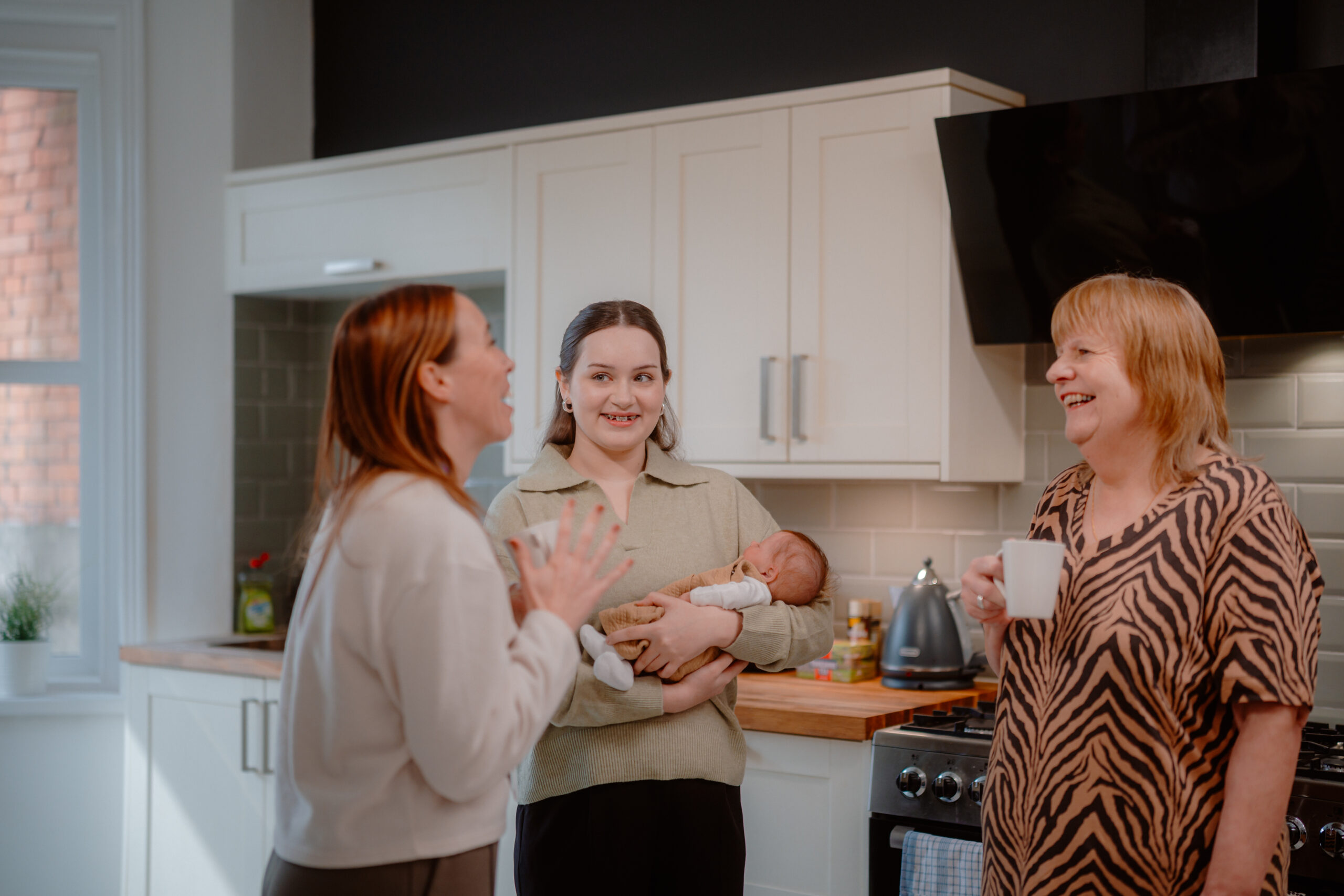
We want to keep families together. That’s why we support parent and child fostering.
This specialist type of placement means welcoming both a young parent and their infant child into your home for up to 12 weeks.
You’ll share your experience with a young adult who needs support to raise their child. This could include teaching basic parenting and household skills, building the parent’s confidence and self-esteem, and providing a safe and nurturing place to stay. You’ll become their role model, exhibiting good parenting to help set up a new family for life.
Could you play a part and help keep families together? Read on to find out.
why become a parent and child foster carer?
There are young people in your local area who need help. They haven’t had the best start to life and need a family to care for and support them so they can break the cycle and provide a better life for their own children.
With local authority help, you can provide a fresh start and nurture the next generation so they can do the same.
share your experience – You don’t need your own children to foster a parent and their child, but you will need to be confident and have experience with infants.
provide a better start than you had – Not all of us had the best childhood. You may be able to relate to a young parent who has had a difficult childhood and experienced abuse. If so, you can help ‘break the curse’ and make a difference for the next generation by encouraging a young parent to love and care for their children.
more people to love – Parent and child fostering can be a great option for families with children – while it will require no less of your time and attention, some children find it easier to accept a family with adults into their home than children alone.
you’ll be paid – While supporting a new parent and their baby is the most important reason for becoming a specialist foster carer, financial support is provided. Carers are given an allowance for every person in their care. On top of this, you’ll get a fee for your skills and experience, as well as benefit from a host of discounts and deals in your local area.
what may disqualify you from becoming a foster carer?
No two children are alike, and neither are our foster carers. There’s no typical foster family. So, whether you are married or single, gay or straight, homeowner or renter – you could foster.
However, there is a small proportion of people who cannot foster. This may be for reasons such as:
- you have serious convictions – Applications will not be accepted if you, or someone in your home, has been convicted of assault GBH, or another violent or sexual crime.
- you’re too busy – Foster children need your time and attention, but this isn’t always possible. If you have a hectic life already, expanding your family this way may not be right.
- your home isn’t big enough – You don’t need to live in a mansion to foster, but you will need a spare bedroom so a foster child can have their own space.
- you’re not a full-time UK resident – We want to give children stability within their community. So, we recommend you foster with the local authority where you live permanently.
- you have dangerous pets – Whether a dog, cat, bunny or any other species, your family pet can provide a warm welcome to a foster child, but not if they’re aggressive and have a history of attacking people.
- you’re in poor health – Taking care of others can take a lot – physically and emotionally. So, if your health is unstable or this new challenge could cause a deterioration, your foster application may not be accepted.
- you smoke or vape – Adults who use nicotine products cannot foster under 5s.
- you travel a lot – While it may be possible to take a foster child on holiday, if you travel a lot, fostering may not be for you.
Read more: Who can foster?
is now the right time?
You may be a great candidate for fostering, but there could be reasons why we encourage you to wait before making an application, such as:
your home isn’t suitable – Small tweaks are required to make your home safe and suitable. Maybe you have an uncovered pond in your garden, open stairs, or building work underway?
you’ve recently lost a loved one – You’ll need to grieve a child, spouse, parent, or other close family member before taking on a foster child.
you’re actively trying for or just had a baby – Getting pregnant and having a child can be tough on your body and mind. So, we ask all new parents to wait six months after having a baby before they start applications.
not everyone agrees – You may want to become a foster carer, but if everyone in the household is not on board, then bringing a new child home isn’t the right choice right now. While parents will be providing the majority of care, it’s important that other children or adults in the home want to be involved and are welcoming.
your child is unwell – Every parent’s priority is their children. So, if your biological child is suffering from a period of ill health, we would recommend you wait until this stabilises before you apply to foster.
your child has behavioural issues – While fostering can bring joy to a home, it also comes with its stresses. If your child is already acting out, a new member of the family can exacerbate this.
will I get parent and child fostering training?
Of course, there’re plenty of learning opportunities and support available with Foster Wales. In fact, parent and child fostering has its own specialised training as it has significant potential to impact disadvantaged families.
Before a parent and child are placed with you, you’ll be invited to a six-day training course which’ll prepare you to host safe, nurturing, and supportive parent and child arrangements.
If you attend this parent and child fostering training course, you can expect the following agenda.
day 1:
- What is parent and child fostering and why do we use it?
- Understanding birth parents
- Adverse childhood experiences (ACES)
- The brain and trauma
- Survival responses and behaviours you may experience within a parent and child placement
day 2:
- Infant mental health
- Healthy pregnancy, birth preparation and birth partner
- Attachment
- How to promote secure attachment between parent and child
- Practical care for babies
day 3:
- Domestic abuse
- Learning difficulties
- Substance misuse
- Mental health
- What about dad’s
- Process and practice
- Role and responsibilities
- Transitions and endings
day 4:
- Trauma-informed parent and child placements
- Building relationships with parents
- Behaviour as communication
- Window of tolerance (Dan Siegel)
- De-escalation (NVR)
- 3Rs (Dr Bruce Perry)
- Emotional regulation (DBT)
- Distress tolerance (DBT)
day 5:
- Effective parent and child fostering
- Risk, safer care, and allegations
- Looking after yourself and coping with stress/endings
day 6:
- Legal context
- Assessment and good enough parenting
- Daily logs and recording
Once you’ve welcomed a young parent and child into your home, we have an ongoing learning and development framework that’s tried and tested across Wales, as well as local training courses where you can meet other foster carers.
You’re never on your own when you’re with Foster Wales. You’ll have:
- A dedicated supervising social worker.
- Guidance, support, and training from My Support Team (MyST).
- Free membership to The Fostering Network and The Association for Fostering and Adoption (AFA) Cymru for independent support, advice, guidance, and training.
- Peer support during our regular events and activities.
There’s no such thing as a stupid question, and we provide support 24/7. Whatever you need, we’ll be there.
ready to learn more?
If you like what you’ve read and are ready to learn more about parent and child fostering in Blaenau Gwent, get in touch with our friendly team and request an information pack today.